Showing posts with label Collects. Show all posts

Sunday, March 26, 2023

Upon the collect for the Fifth Sunday in Lent

Almighty God, you alone can bring into order the unruly
wills and affections of sinners: Grant your people grace to
love what you command and desire what you promise; that,
among the swift and varied changes of the world, our hearts
may surely there be fixed where true joys are to be found;
through Jesus Christ our Lord, who lives and reigns with
you and the Holy Spirit, one God, now and for ever. Amen.

The line is, "How many Christians does it take to change a light bulb?"

CHANGE?!

That may be funny.  It is also demonstrably true.  As a group, Christians are not big fans of change.  Oh, we have made our peace with air conditioning, padded pews and electric organs.  But we can be set in our ways in regard to process and what we sometimes call "Tradition."  It has been remarked that the Seven Last Words of the Church will be, "we've never done it that way before."

Our collect invokes the action of God to "fix our hearts in the face of the swift and varied changes of the world."  I believe that one of the attractions the church offers is that we tend to do the same things in the same ways week after week.  That kind of constancy can be a blessing.  But mindless routine is a curse.  We trust in the steadfastness of God to anchor us in what is righteous while preventing us from falling victim to the blasphemy of the mundane.

I believe that the pivotal word in this prayer is not "unruly" or "changes " or "fixed."  I believe the key term in this entreaty is "joy."  We pray that God will set our hearts on our true source of joy, the Lord Jesus Christ.  Lent is so often portrayed as a dark and dour time.  But it is the very purpose of the season to bring us into deeper communion with the source of  our hope.  And of our joy.

Sunday, March 19, 2023

Upon the collect for The Fourth Sunday in Lent

Gracious Father, whose blessed Son Jesus Christ came down
from heaven to be the true bread which gives life to the world:
Evermore give us this bread, that he may live in us, and we in
him; who lives and reigns with you and the Holy Spirit, one
God, now and for ever. Amen.

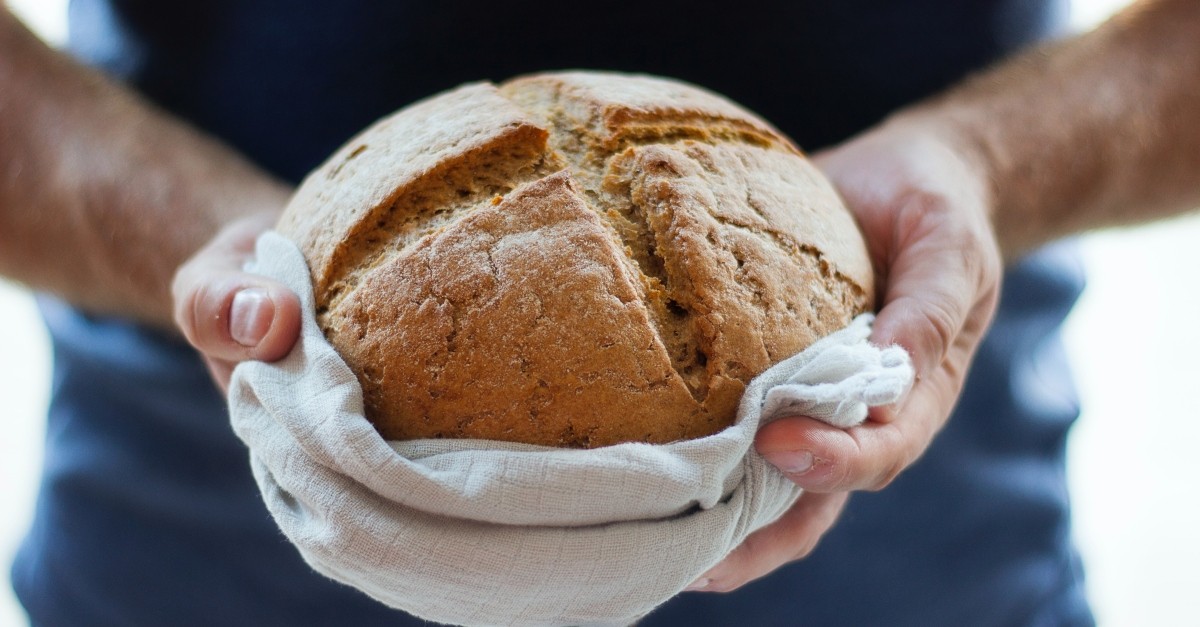
We have all heard of harsh prison sentences where the incarcerated individual is limited to  "bread and water."  The intent of the punishment is to put a convicted law-breaker on a subsistence diet.  It is enough to maintain, but it is meant not to be a means by which the prisoner may thrive.  It is a starvation diet.  It is intended to cause discomfort and even misery.

For the Community of Faith, it is different.  Christ is the true bread of heaven.  In John 6, Jesus says, "I am the bread of life. Whoever comes to me will never be hungry, and whoever believes in me will never be thirsty."  Within our faith, we uphold the belief that Christ is sufficient for our nurture, our flourishing, and our salvation.  

It is not the intent of a gracious God that we "get by."  Christian folks think not just of subsistence life, but abundant life.  God provides for our bodies and our spirits in a way that no other source can deliver.  

We remember the gift of Holy Communion that provides for our spirits and serves as a foreshadowing of the full range of gifts that Christ the Bread of Life provides.


Sunday, March 12, 2023

Upon the collect for the Third Sunday in Lent

Almighty God, you know that we have no power in ourselves
to help ourselves: Keep us both outwardly in our bodies and
inwardly in our souls, that we may be defended from all
adversities which may happen to the body, and from all evil
thoughts which may assault and hurt the soul; through Jesus
Christ our Lord, who lives and reigns with you and the Holy
Spirit, one God, for ever and ever. Amen.


This is the Collect for the Third Sunday in Lent.  It contains the affirmation, "We have no power in ourselves to heal ourselves."  Among the many themes of this stretch of time is our total dependence on God's Grace.  The church has combated the concept of "works righteousness" from its beginnings.  

One can understand the reasoning behind embracing a theology of works.  In a culture of the "self-made individual" and "pulling oneself up by the bootstraps" it is attractive to think that our salvation can be accomplished by our own actions.  If we work hard enough, strive faithfully enough, and check all the boxes that should be enough to earn a spot in heaven.

But the church has never taught that.  Salvation is not a human activity.  Deliverance is an act of God, and God grants that gift not to the active but to the faithful.

The collect goes on to petition the Lord to keep and defend us.  This is a further assertion that we are utterly dependent on God.

The season of Lent is a time of seeking to be drawn closer to God.  It is not about us.  It is about God.

Sunday, March 5, 2023

Upon the Collect for the Day


O God, whose glory it is always to have mercy: Be gracious to all who have gone astray from your ways, and bring them again with penitent hearts and steadfast faith to embrace and hold fast the unchangeable truth of your Word, Jesus Christ your Son; who with you and the Holy Spirit lives and reigns,one God, for ever and ever. Amen.


This is the collect for the week (The Second Sunday in Lent) from The Book of Common Prayer. As with most of the prayers in this volume this collect has a simple elegance that I find in few other places.  If you compare the BCP to most of the liturgical and prayer resources of The United Methodist Church the UMC material hides its face in shame.  One of my mentors in commenting on Methodism’s rituals told me, “Some day our church will employ a poet as part of the liturgy production process, and we’ll be far better off than we are now.”

Truer words.

But, as I consider the work at hand, one term strikes me.  It is the word “unchangeable.”   It comes in the phrase “to hold fast the unchangeable truth of your Word, Jesus Christ your Son.”  I hear this with the ears of someone who has endured the blather of the United Methodist Church’s special called General Conference of three years ago.  I heard this word and similar ones bandied about by people who seemed to have no idea what their language meant.

Because there is a difference between “unchangeable” and “unchanging.”  Unchangeable is a word that we reserve for God and Christ and the Holy Spirit.  It speaks of Truth with a capital “T.”  Unchanging is a more stubborn word and folks seem to use it to defy the reality that things of the faith and understanding and revelation are fluid in their natures.  The list of things about which the church (or much of the church) has altered the literal language of the Bible is endless.  The role of women, slavery, treatment of children, polygamy, capital punishment and a host of dietary laws do not begin to complete the list of practices that modern-day Christians have modified beyond the letter of the law in Scripture. 

Anyone who says that faith and commandment and law are static terms in the practice of the Christian religion is either naïve or spends their entire life with their head in the sand.  God is unchangeable.  Revelation is ever-changing.  That we are not bound by a rigid set of laws under penalty of damnation is affirmed in the first line of today’s collect: O God, whose glory it is always to have mercy…  If it is God’s nature to put mercy first, it seems only fitting that those who would identify themselves as children of God should do the same.

Sunday, March 13, 2022

Upon the Collect of the Day


O God, whose glory it is always to have mercy: Be gracious to all who have gone astray from your ways, and bring them again with penitent hearts and steadfast faith to embrace and hold fast the unchangeable truth of your Word, Jesus Christ your Son; who with you and the Holy Spirit lives and reigns,one God, for ever and ever. Amen.


This is the collect for the week (The Second Sunday in Lent) from The Book of Common Prayer. As with most of the prayers in this volume this collect has a simple elegance that I find in few other places.  If you compare the BCP to most of the liturgical and prayer resources of The United Methodist Church the UMC material hides its face in shame.  One of my mentors in commenting on Methodism’s rituals told me, “Some day our church will employ a poet as part of the liturgy production process, and we’ll be far better off than we are now.”

Truer words.

But, as I consider the work at hand, one term strikes me.  It is the word “unchangeable.”   It comes in the phrase “to hold fast the unchangeable truth of your Word, Jesus Christ your Son.”  I hear this with the ears of someone who has endured the blather of the United Methodist Church’s special called General Conference of three years ago.  I heard this word and similar ones bandied about by people who seemed to have no idea what their language meant.

Because there is a difference between “unchangeable” and “unchanging.”  Unchangeable is a word that we reserve for God and Christ and the Holy Spirit.  It speaks of Truth with a capital “T.”  Unchanging is a more stubborn word and folks seem to use it to defy the reality that things of the faith and understanding and revelation are fluid in their natures.  The list of things about which the church (or much of the church) has altered the literal language of the Bible is endless.  The role of women, slavery, treatment of children, polygamy, capital punishment and a host of dietary laws do not begin to complete the list of practices that modern-day Christians have modified beyond the letter of the law in Scripture. 

Anyone who says that faith and commandment and law are static terms in the practice of the Christian religion is either naïve or spends their entire life with their head in the sand.  God is unchangeable.  Revelation is ever-changing.  That we are not bound by a rigid set of laws under penalty of damnation is affirmed in the first line of today’s collect: O God, whose glory it is always to have mercy…  If it is God’s nature to put mercy first, it seems only fitting that those who would identify themselves as children of God should do the same.